

OSHA Fall Protection
The 6-Foot Rule Changed Everything. NCC's Panel System Is the Answer.
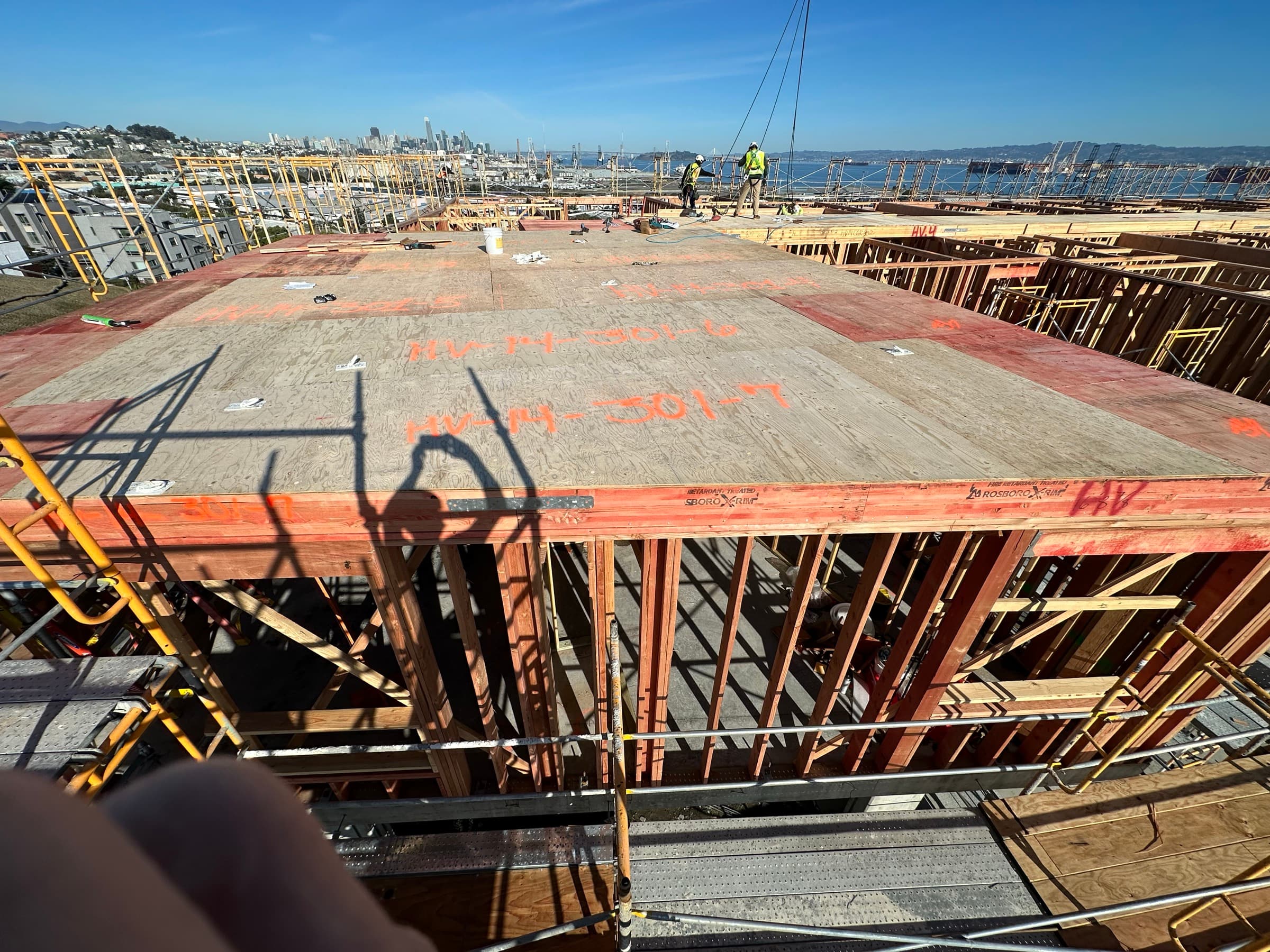
Cal/OSHA Section 1716.2 drops the fall protection trigger height from 15 feet to 6 feet for wood-frame framing — effective July 2025. Traditional compliance methods slow crews down and drive up costs. NCC prefabricated panels provide a built-in solution: solid, sheathed work platforms from the moment they are crane-set.
What the Rule Requires
Cal/OSHA Section 1716.2 — effective July 2025
Fall Protection Trigger Height: 6 Feet
California previously allowed wood-frame framing activities up to 15 feet without fall protection under a construction-industry exemption. Section 1716.2 eliminates that exemption, aligning California with the federal OSHA standard of 6 feet.
This means any worker on a wood-frame construction site whose feet are 6 feet or more above a lower level must have fall protection — guardrails, safety nets, or a personal fall arrest system. There are no exceptions for “active framing” or “leading edge” work in wood-frame construction.
The rule applies to all wood-frame framing activities: floor framing, wall framing, roof framing, and sheathing. Every worker, every level, every day.
The Problem with Traditional Compliance
Conventional fall protection methods create real obstacles on wood-frame jobsites.
Guardrails Get in the Way
Temporary guardrail systems obstruct framing workflows. Crews spend as much time installing and relocating guardrails as they do framing — and guardrails must be moved every time a new section opens up.
Harness Anchor Points Are Limited
Personal fall arrest systems require rated anchor points. During early framing stages, there are few — if any — structural members capable of serving as anchors, leaving crews exposed.
Safety Nets Are Impractical
Safety nets require clearance below the work surface and structural supports to attach to. On wood-frame projects, especially in the early stages, neither condition exists reliably.
Per-Worker Citations Add Up Fast
OSHA cites per-worker, not per-site. A crew of 8 with inadequate fall protection can generate over $130,000 in fines from a single inspection — before any willful violation multipliers.
The NCC Solution
NCC designs, manufactures, and delivers prefabricated panels. Your crew installs them — on a solid platform from the start.
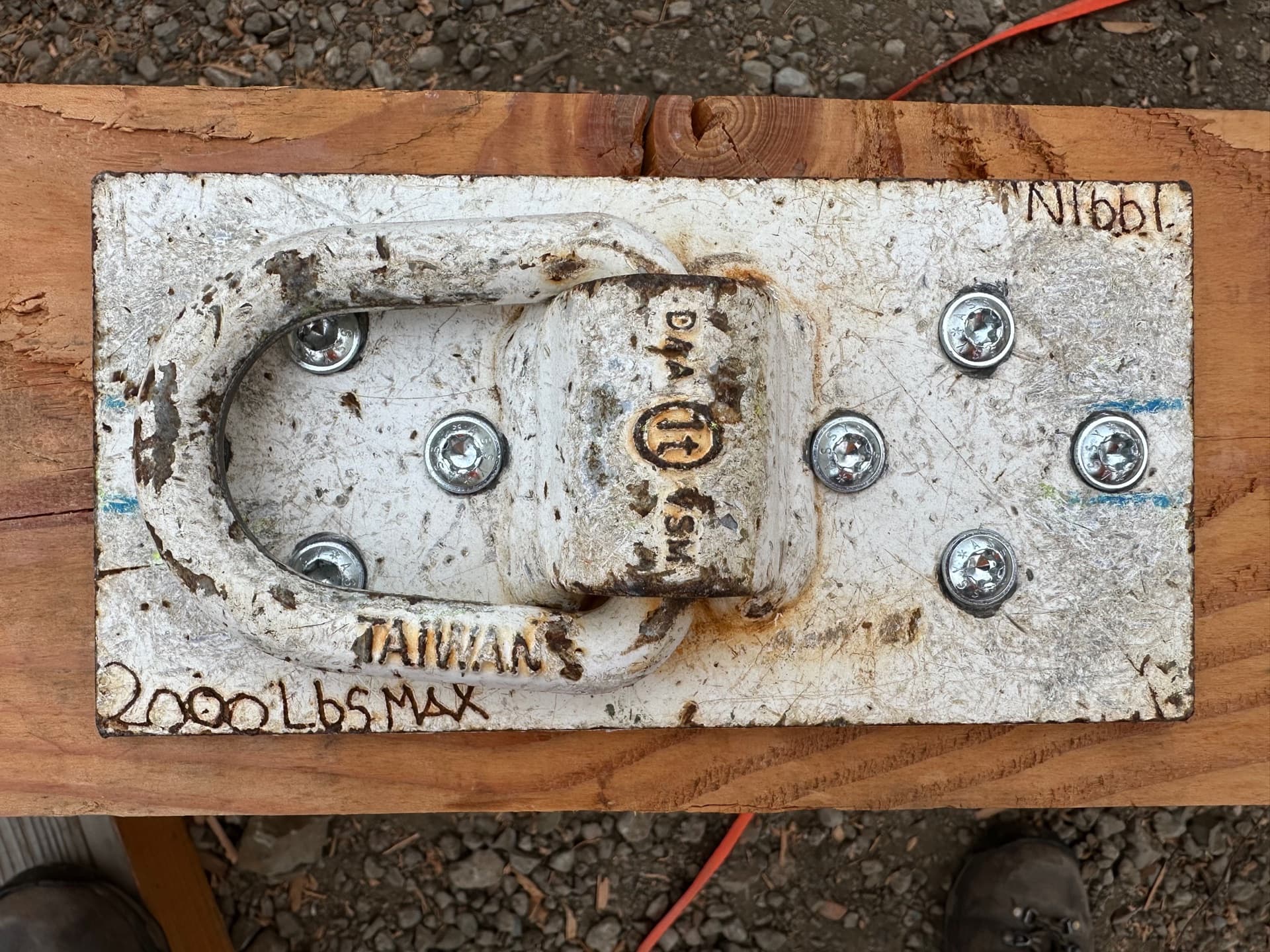
2,000 lb rated D-ring tie-off point — built into every panel
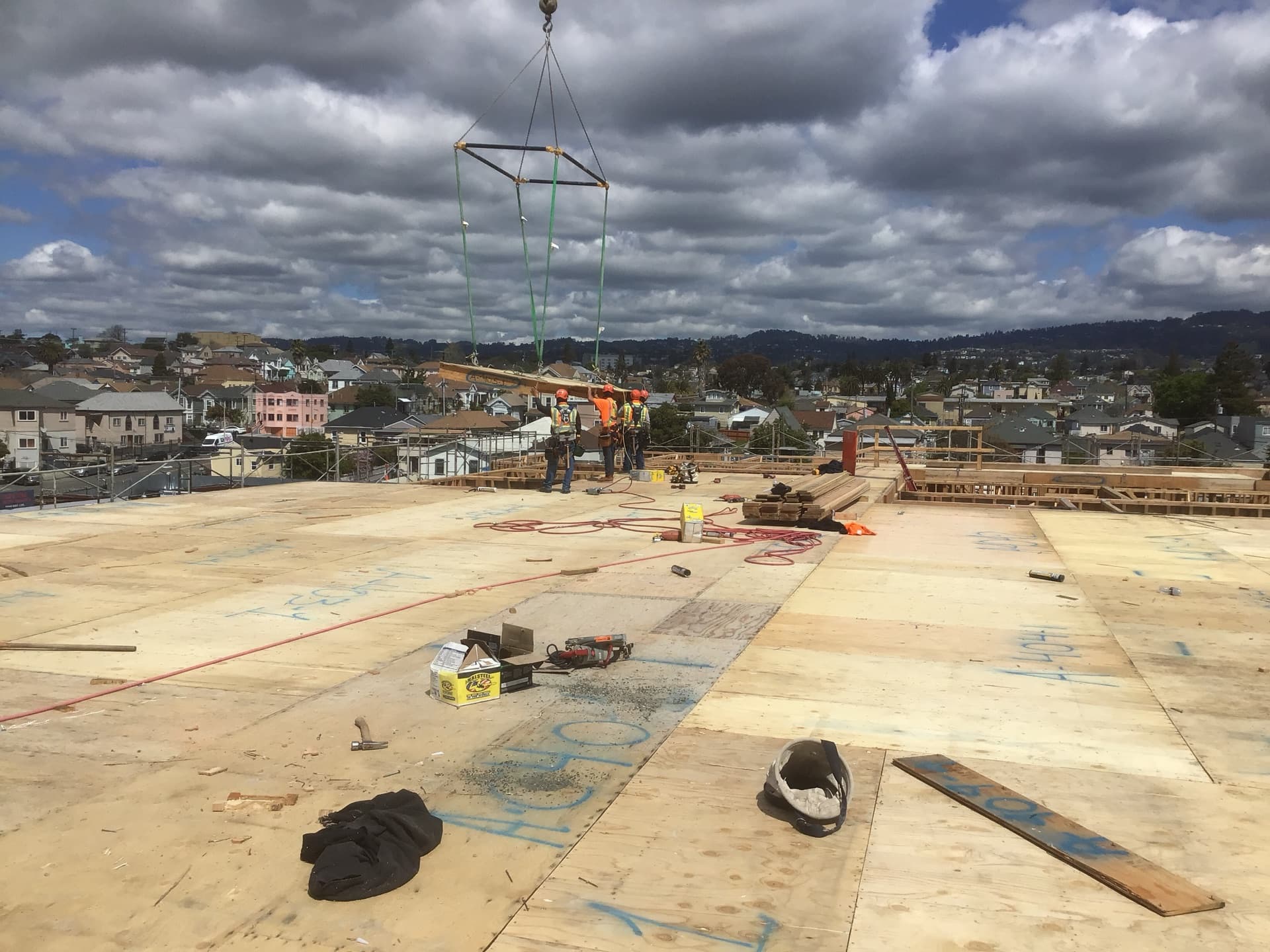
Panels Arrive Fully Sheathed
Every NCC floor cassette and wall panel ships with sheathing already attached. The moment a panel is set, there is a solid walking and working surface — no open joists, no gaps.
Crane-Set Means Instant Platform
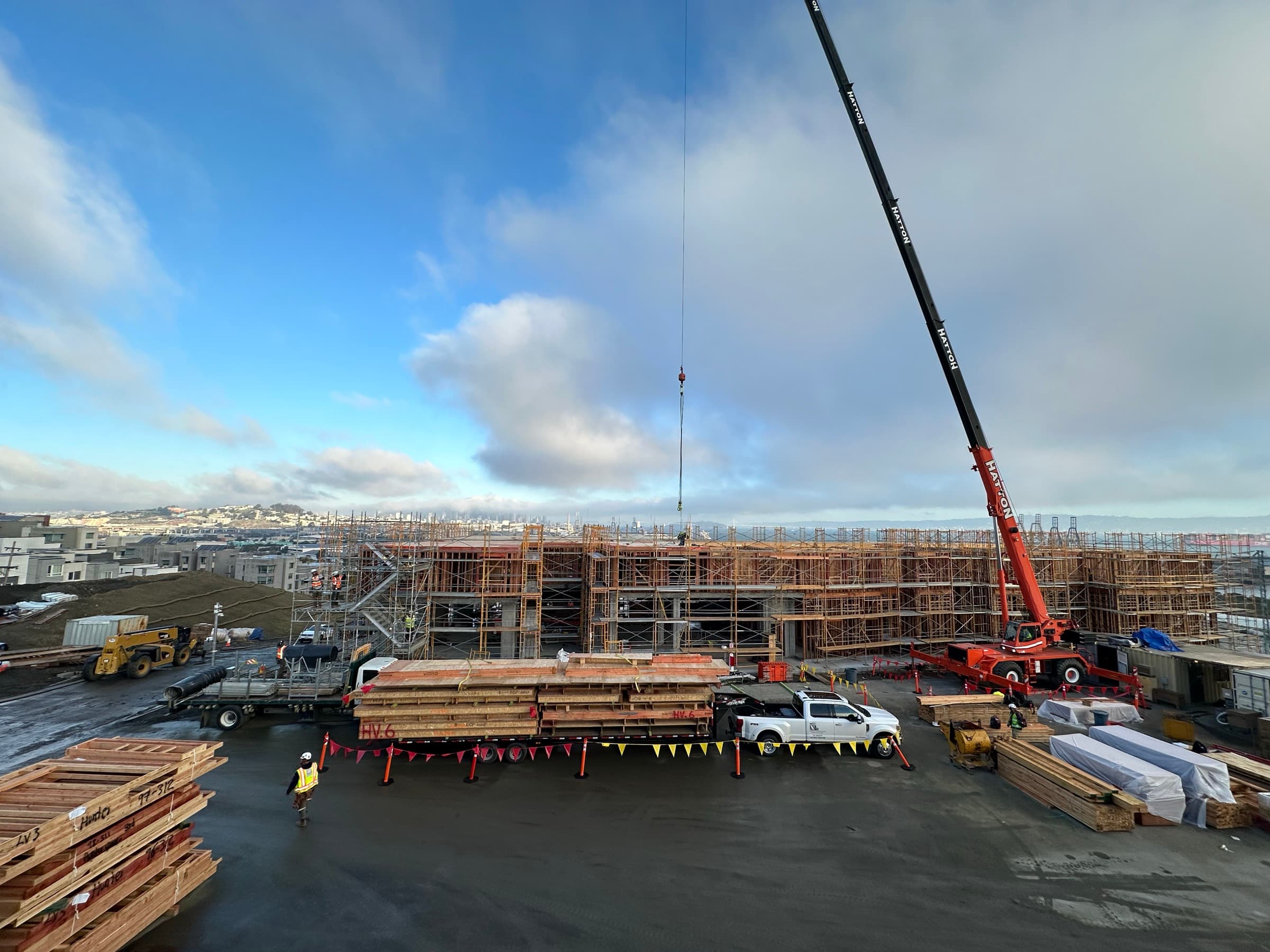
Panels go directly from the truck to their final position by crane. As soon as a section of floor cassettes is set and fastened, the crew has a solid, code-compliant work platform for the next level.
No Open Joists to Fall Through
With stick framing, workers walk on open joists with gaps between them. NCC floor cassettes are solid — the floor IS the platform. No temporary covers or plywood needed.
NCC Designs and Delivers. Your Crew Installs.
NCC's design team engineers every panel for your project. We manufacture and deliver — your crew handles installation with fewer workers, less time at height, and a safer work surface from the start.
Side-by-Side: Stick Framing vs. NCC Panels
How each approach handles fall protection in real jobsite scenarios.
Second-floor framing begins
Workers stand on open joists. Fall protection required immediately at 6 ft — guardrails or harnesses needed before any framing can start.
Floor cassettes are crane-set. Workers step onto a solid sheathed platform. Framing the walls above starts immediately on a code-compliant surface.
Sheathing the floor deck
Workers carry and install 4x8 sheets on open joists at height. Each sheet must be measured, cut, and fastened — all while balancing on framing members.
Sheathing is factory-applied. Zero on-site floor sheathing labor at height. The panels arrive ready to walk on.
OSHA inspector arrives on site
Every worker above 6 ft without active fall protection is a separate citation. Inspector documents each worker individually.
Workers are standing on solid, sheathed floor cassettes. The work platform itself satisfies the primary fall protection requirement for the floor surface.
Beyond Compliance
NCC panels don't just help you meet the rule — they reduce risk across the board.
No On-Site Cutting at Height
All cuts, notches, and penetrations are made in the factory on flat tables. Workers at height handle finished components, not raw lumber and saws.
Reduced Time at Height
Crane-setting panels compresses the framing timeline by 30-50%. Less time at height means less exposure to fall hazards — simple math.
Smaller Crews, Less Exposure
A crew of 3 can set 5,000 sq ft of floor cassettes per day. Fewer workers at height means fewer opportunities for incidents and fewer workers to protect.
Less Material Handling at Height
Stick framing requires hoisting thousands of individual pieces to upper floors. NCC panels arrive as complete assemblies — dramatically reducing trips, lifts, and awkward carries at elevation.
Cleaner Work Surface
No loose lumber, cut-offs, or debris scattered across open joists. A sheathed floor cassette provides a clean, flat, stable surface from the moment it is set.
Faster Dry-In
Sheathed floor cassettes and wall panels accelerate the path to a dried-in structure. Less time exposed to weather means less time crews work on wet, slippery surfaces at height.
Regulatory Quick Reference
Key codes, standards, and penalty amounts you need to know.
Cal/OSHA Section 1716.2
Fall Protection for Wood-Frame Construction
Effective July 2025. Lowers the fall protection trigger height from 15 feet to 6 feet for all wood-frame framing activities in California. Applies to floor, wall, and roof framing.
Federal OSHA 29 CFR 1926.501
Duty to Have Fall Protection
Requires fall protection at 6 feet for all construction activities nationwide. The federal standard has always been 6 feet — California’s wood-frame exemption at 15 feet is being eliminated.
OSHA Penalty Schedule (2025)
Current Fine Amounts
Serious violation: up to $16,550 per worker. Willful violation: up to $165,514 per worker. Repeat violation: up to $165,514 per worker. Penalties are assessed per worker, not per site.
Simplify Compliance on Your Next Project
Send us your plans and our design team will show you how NCC prefabricated panels can reduce fall exposure, compress your schedule, and keep your crews working on solid platforms — not open joists.